Why Does Soccer Count Up? The Unique Feature Explained
Ever asked yourself why does soccer count up the clocks unique feature instead of counting down like in most American sports? The reason stems from the sport’s deep historical roots, the official role of the referee as the sole timekeeper, and the fundamental philosophy of continuous play. Unlike basketball or American football, where a dedicated timekeeper stops the clock during every foul or out-of-bounds, soccer maintains a running clock from zero to 45 minutes each half. This simple upward count allows the referee to manage the flow of the game seamlessly, adding on any lost time due to injuries or substitutions as “stoppage time” at the very end.
Soccer clocks count up because the referee acts as the sole timekeeper on the field. Since play is continuous, it is far easier for the referee to start a stopwatch at zero and let it run, manually noting any “lost time” to add at the end of the 45-minute half. This traditional method preserves the fluid, uninterrupted pace of the game.
Contents
The Referee as the Ultimate Timekeeper
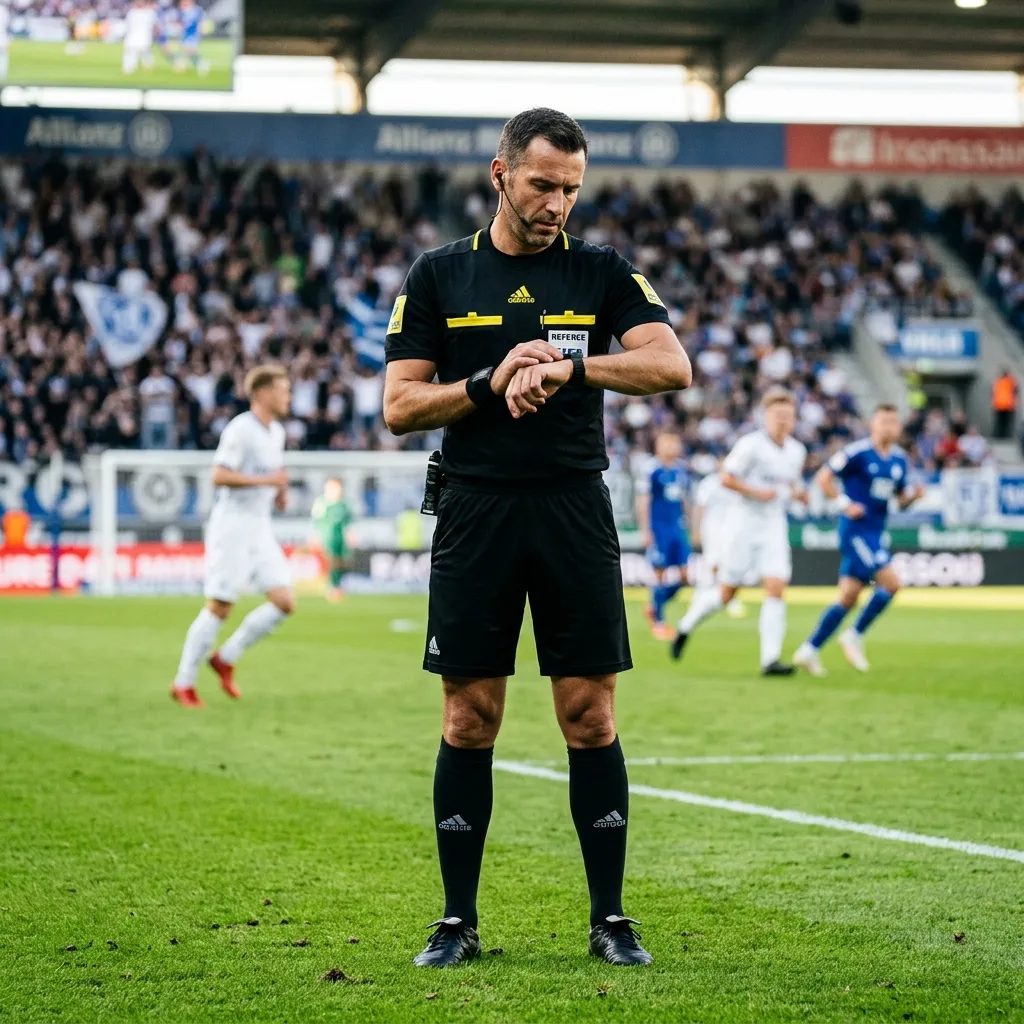
In professional soccer, the stadium scoreboard is merely a reference. The only official game clock is the stopwatch on the referee’s wrist. Because the referee has to manage fouls, disciplinary actions, and player safety, counting up from zero makes manual timekeeping far simpler than constantly pausing and resetting a countdown.
If there are interruptions, the referee simply keeps a mental or secondary tally of the “lost time” and tacks it on after 45 minutes. This ensures that the time kept is accurate to the referee’s discretion without needing to consult a separate off-field timekeeper or video board official.
Historical Tradition and Simplicity
When the rules of modern soccer were codified in 19th-century England, electronic scoreboards and countdown clocks didn’t exist. Referees used standard pocket watches. It was the most logical approach to start the watch at the kickoff and let it run until it hit 45 minutes.
This historical tradition has endured, preserving the sport’s charm and connecting the modern multi-billion dollar spectacle directly to its humble Victorian origins. Changing it now would fundamentally alter how the game is officiated worldwide.
- Maintains continuous flow and game rhythm.
- Simpler for a single referee to manage manually.
- Adds dramatic tension with unpredictable stoppage time.
- Fans don’t know the exact end time of the match.
- Subjective timekeeping by the referee can cause controversy.
- Can encourage intentional time-wasting by players.
Preserving the Flow of Continuous Play
Perhaps the greatest benefit of a running clock is the preservation of continuous play. Soccer is a sport of rhythm, stamina, and uninterrupted momentum. Stopping the clock every time the ball rolls out of bounds or a minor foul occurs would fracture the game into disjointed segments.
This would completely alter the physical demands and tactical fluidity of the match. The continuous count-up clock ensures the beautiful game remains fast-paced and fluid from start to finish. It also leaves less room for teams to intentionally waste time by drawing out clock stoppages, as the referee controls the final whistle.
| Sport | Clock Direction | Timekeeper |
|---|---|---|
| Soccer | Counts Up | Referee |
| Basketball | Counts Down | Off-court official |
| American Football | Counts Down | Off-field official |
Frequently Asked Questions
Why does the clock count up instead of down in soccer?
The clock counts up in soccer because the referee is the sole official timekeeper. Using a running clock from 0 to 45 minutes makes it easier for the referee to track total elapsed time and mentally calculate stoppage time without needing to constantly pause and reset a watch.
Does the clock stop during a soccer match?
No, the official game clock does not stop during the match for fouls, throw-ins, or injuries. Instead, the referee adds “stoppage time” to the end of the 45-minute half to compensate for significant delays, ensuring continuous play.
Will soccer ever change to a countdown clock?
It is highly unlikely that soccer will change to a countdown clock. The IFAB (International Football Association Board) and traditionalists strongly believe the current system preserves the continuous flow of the game, preventing it from becoming fragmented like American sports.
In conclusion, the decision to let the clock count up is an integral part of what makes the sport uniquely fluid. Next time you watch a match, you’ll appreciate how this simple timekeeping rule contributes to the drama and pace of the game. Get out there and enjoy the match!
Get our latest guides, news, and insights highlighted in your Google Search & AI Overviews.