
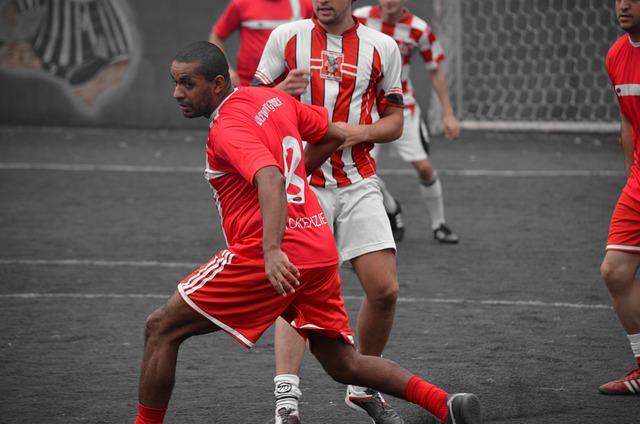
What Soccer Position Runs the Most? Insights into Demanding Roles!
Have you ever wondered which soccer position requires the most stamina and endurance on the field? Well, look no further, because we’re about to dive into the captivating world of demanding roles in soccer. From the tireless workhorses to the energetic strategists, this article sheds light on what soccer position runs the most. Get ready to gain insights into the physically demanding aspects of the beautiful game, as we unravel the secrets behind these vital roles. So lace up your boots, grab a sports drink, and let’s explore the fascinating truths of the players who go the extra mile on the field!
Contents
- 1 Goalie: The Unsung Hero Who Patrols the Penalty Area
- 2 Defensive Midfielder: The Engine Room of the Team
- 3 Winger: Fierce Runners Serving Up Crosses
- 4 Attacking Midfielder: Orchestrating Plays and Covering Ground
- 5 Fullbacks: Tireless Defenders Running the Length of the Field
- 6 Striker: The Sprinter Hunting for Goals
- 7 Center Back: Commanding the Defense with Stamina
- 8 Centre Midfielder: Masters of the Midfield Battleground
- 9 Forward: Endurance and Speed for the Offensive Line
- 10 The Conclusion
Goalie: The Unsung Hero Who Patrols the Penalty Area
Every soccer position requires a unique skillset and demands specific qualities from the player. But when it comes to running, there’s no doubt that goalies have a challenge on their hands (or rather, feet!). While they may not cover as much ground as the midfielders or forwards, goalies engage in intense bursts of movement that can leave them breathless.
Here are some insights into why the role of a goalie is physically demanding:
- Reacting to shots: Goalies must be lightning-fast when it comes to diving to make a save. The quick reflexes required to stop powerful shots demand a high level of agility and coordination.
- Distributing the ball: After making a save, goalies often need to quickly distribute the ball to initiate a counterattack. This requires accurate, long-distance throws or kicks, which can put strain on their leg muscles.
- Commanding the defense: Goalies act as the eyes and ears of their team’s defense, constantly communicating and orchestrating the players in front of them. This mental work, combined with the physical demands, can be exhausting.
While goalies may not cover as much distance as their outfield counterparts, their bursts of explosive movement and rapid decision-making make their role physically demanding in its own unique way. They play a crucial role in protecting the goal, often making split-second saves that can determine the outcome of a match. So next time you watch a game, spare a thought for the unsung heroes who patrol the penalty area!
Defensive Midfielder: The Engine Room of the Team
In the game of soccer, each position on the field has its own unique demands and requirements. However, one position that stands out for its physicality and endurance is the defensive midfielder. This crucial role is often referred to as the “engine room of the team” due to the incredible amount of ground it covers and the multi-faceted responsibilities it entails.
Defensive midfielders act as the connecting link between the defense and the attack. They are responsible for not only breaking up the opponent’s play and providing cover for the defense but also initiating attacks and distributing the ball forward. They need to be able to read the game well, anticipate the opposition’s moves, and make critical interceptions to regain possession for their team.
What sets defensive midfielders apart from other positions is their exceptional work rate and stamina. They constantly move around the pitch, tracking back to help defend, charging forward to support the attack, and often covering huge distances in the process. It’s no wonder that defensive midfielders are often the players who cover the most ground during a match.
Another essential skill for defensive midfielders is their ability to win aerial duels and tackle effectively. Not only do they need to be strong in the air to contest headers, but they also need to time their tackles perfectly to regain possession without conceding fouls. Their physicality and ability to win tackles provide a solid foundation for their team’s defense and allow them to break up the opponent’s attacks effectively.
To summarize, defensive midfielders play a vital role in soccer teams as the engine room of the team. They cover vast amounts of ground, contribute both defensively and offensively, and possess the physicality and skills necessary to excel in this demanding position. It is often said that a solid defensive midfielder is the backbone of a successful team, and their performances can make a significant impact on the outcome of a match.

Winger: Fierce Runners Serving Up Crosses
The role of a winger in soccer is often associated with fierce running and the ability to serve up crosses. Wingers are known for their speed, agility, and attacking prowess on the flanks of the field. They play a crucial role in a team’s offensive strategy, as they are responsible for creating goal-scoring opportunities by delivering accurate crosses into the box.
One of the most demanding positions on the soccer field, wingers are constantly on the move, making runs up and down the wing. They need to have exceptional fitness levels to cover long distances throughout the course of a game. The constant back-and-forth motion requires both endurance and explosive bursts of speed.
Wingers are also expected to possess excellent dribbling skills to maneuver past defenders and create space for themselves. Their ability to change direction quickly and accelerate past opponents is key to their success. This agility allows them to get behind the defense and deliver accurate crosses into the box, giving their teammates scoring opportunities.
To be an effective winger, players must have a strong understanding of the game and the tactical aspect of their role. They need to be aware of their teammates’ movements, anticipate their runs, and time their crosses perfectly. This requires great vision, decision-making, and communication skills.
In conclusion, the winger position in soccer demands fierce running, exceptional speed, and precise crossing ability. These players are the unsung heroes of the team, constantly working the flanks and serving up opportunities for their teammates. Their contribution to the offensive strategy cannot be underestimated, making them an integral part of any successful soccer team.
Attacking Midfielder: Orchestrating Plays and Covering Ground
An attacking midfielder is a vital position in the game of soccer, responsible for orchestrating plays and covering a significant amount of ground on the field. This role requires high levels of skill, vision, and stamina. Attacking midfielders are known for their ability to create scoring opportunities for their teammates while also contributing defensively.
One of the key tasks of an attacking midfielder is to be the link between the midfield and the forward line. They play a crucial role in providing forward passes, through balls, and crosses into the opponent’s penalty area. Their vision and passing accuracy are often unmatched, as they are constantly scanning the field for opportunities to create attacking plays.
In addition to their playmaking abilities, attacking midfielders are also required to track back and contribute defensively. They are expected to apply pressure on the opposition’s midfielders and cut passing lanes. This defensive work helps to regain possession and launch counterattacks, making them critical players in both attacking and defending transitions.
The demands of this position require attacking midfielders to have exceptional physical abilities. They need the endurance to cover large distances on the field, making overlapping runs and providing support to both the defense and the attack. Their agility and quickness are essential in evading opponents and finding space to create scoring opportunities.
In summary, the role of an attacking midfielder is demanding, both physically and mentally. They are the playmakers, orchestrating plays and covering an immense amount of ground on the field. Their role in both attacking and defensive phases of the game makes them an indispensable asset to any team.
Fullbacks: Tireless Defenders Running the Length of the Field
Fullbacks are the unsung heroes of the soccer field, tirelessly defending their goal while also contributing to the team’s attack. These versatile players are known for their exceptional stamina and endurance, as they continuously run the length of the field throughout the match. In fact, fullbacks are the soccer position that runs the most during a game, covering an average of 10-12 kilometers per match.
One of the key responsibilities of fullbacks is to provide defensive support to their team. They stay alert throughout the game, tracking the movements of opposing attackers and preventing them from reaching their team’s goal. With their quick reflexes and ability to read the game, fullbacks are often the last line of defense, making crucial tackles and interceptions.
But fullbacks don’t just excel in their defensive duties; they also play a crucial role in the team’s attacking strategy. Their constant runs up and down the flanks not only create width in the team’s formation but also provide an additional option for their teammates to pass the ball. Many fullbacks have excellent crossing abilities, delivering accurate passes into the penalty area, thereby creating goal-scoring opportunities for their teammates.
To be successful in this demanding position, fullbacks require a combination of physical and technical skills. Their speed and agility allow them to keep up with the pace of the game, while their dribbling and passing abilities enable them to contribute to the team’s buildup play. Additionally, fullbacks must possess strong communication skills, as they need to effectively coordinate with their central defenders and midfielders to maintain defensive solidity and launch successful attacks.
In summary, fullbacks are the workhorses of the soccer field, constantly running and defending the length of the pitch. Their dual role as tireless defenders and integral contributors to the team’s attack make them a vital asset for any soccer team. So, the next time you watch a game, pay attention to the hard work and dedication of these unsung heroes, the fullbacks.
Striker: The Sprinter Hunting for Goals
If you’ve ever wondered which soccer position requires the most stamina and speed, look no further than the striker. Known as the sprinter hunting for goals, the striker’s role is crucial in any team’s success. This electrifying position demands a unique combination of physical prowess and strategic thinking, making it one of the most challenging yet exhilarating positions on the field.
Strikers are constantly on the move, tirelessly running up and down the field in pursuit of scoring opportunities. Their main objective is simple: to put the ball into the back of the net. From quick bursts of acceleration to long sprints, strikers cover a substantial distance during a soccer match, making them the position that runs the most. With their lightning-fast speed and agility, they are often seen stealthily darting past defenders and latching onto through balls.
Furthermore, strikers must possess exceptional fitness levels to maintain their performance throughout the entire game. They need to endure consecutive sprints, explosive jumps, and physical battles with opposing defenders. This high-intensity workload calls for proper conditioning and training to ensure that they remain a constant threat within the opposition’s defense.
In conclusion, strikers play a crucial role in a soccer team’s offensive strategy. Their ability to cover the most distance on the field while chasing goals requires a unique set of skills and stamina. The demanding nature of this position showcases the athleticism and determination required to be a successful striker. Without a doubt, the sprinter hunting for goals always keeps the crowd on the edge of their seats.

Center Back: Commanding the Defense with Stamina
When it comes to the soccer positions that require the most running, it’s hard to find a role that matches the sheer demanding nature of the center back position. Center backs are the backbone of the defensive line, responsible for organizing and leading their team’s defense. But it’s not just their leadership skills that make them stand out; it’s their incredible stamina that sets them apart from the rest.
The center back position is known for its relentless running from one end of the field to the other. From marking opposing strikers to intercepting passes, these players need to be agile and quick on their feet. Their stamina allows them to cover large distances during a match, ensuring that they can effectively shut down any attacking plays.
To excel as a center back, players need to possess not only physical endurance, but also mental acuity. They must anticipate their opponent’s moves, read their body language, and make split-second decisions to protect their team’s goal. It’s a position that requires both athleticism and tactical prowess.
So, the next time you’re watching a soccer match, pay close attention to the center backs. They may not receive as much glory as the strikers who score the winning goals, but their ability to command the defense with stamina is truly remarkable. It’s a position that exemplifies the true essence of teamwork and dedication.
Centre Midfielder: Masters of the Midfield Battleground
The role of a centre midfielder in soccer is often regarded as one of the most demanding positions on the field. These players are the masters of the midfield battleground, controlling the flow of the game and dictating the pace of play. Known for their exceptional ball control, vision, and tactical awareness, centre midfielders are the heart and soul of any successful team.
One of the reasons why centre midfielders run the most in a game is due to their responsibility to link the defense and attack. These players are constantly on the move, covering large distances to support their teammates in both offensive and defensive situations. They are the engine room of the team, tirelessly covering ground, providing defensive cover, and making those crucial passes to unlock the opposition defense.
In addition, centre midfielders often engage in physical battles with their opponents. They are constantly fighting for possession of the ball, challenging for headers, and making tackles to regain control. This relentless effort requires immense stamina and endurance, as they need to maintain a high level of intensity throughout the entire match.
To give you a better understanding of the demanding nature of the centre midfielder role, here is an example of the average distance covered by professional players in different positions, according to recent studies:
| Position | Average Distance Covered (in kilometers) |
|---|---|
| Centre Midfielder | 12-13 |
| Defender | 10-11 |
| Attacker | 9-10 |
As you can see, centre midfielders cover the most ground during a game, highlighting the demanding nature of their role. So, the next time you watch a match, pay close attention to these unsung heroes in the middle of the park, as they tirelessly battle it out to make their team succeed.

Forward: Endurance and Speed for the Offensive Line
The game of soccer is known for its fast-paced nature and demanding roles for each player on the field. While every position requires a different set of skills and attributes, some positions require more endurance and speed than others. In this post, we will explore the position that runs the most on the field, giving you insights into the physically demanding roles in soccer.
1. Midfielders: When it comes to covering the most ground on the field, midfielders take the lead. Being the link between defense and offense, midfielders have to constantly move up and down the pitch, providing support to both their teammates in defense and their attackers upfront. Their ability to maintain their stamina and speed for 90 minutes is crucial for a successful team.
2. Wingbacks: Operating along the flanks, wingbacks play an essential role in both attack and defense. They are responsible for overlapping runs, supporting the wingers and delivering crosses into the box. Their constant tracking back to defend against opposing wingers makes them cover a significant distance throughout the game.
3. Strikers: While it may seem that strikers have a less physically demanding role, they actually have short bursts of intense activity. They constantly make sprints into open spaces, challenging the opposition’s defense line. Their ability to react quickly and run behind the defenders is crucial for scoring goals.
4. Fullbacks: Fullbacks, also known as outside backs, are responsible for maintaining a strong defensive presence and supporting the attack when needed. They have to cover a lot of ground, both horizontally and vertically, as they are involved in both defensive and offensive plays. Their constant movement up and down the flanks requires great endurance and speed.
These are just a few positions that demand high endurance and speed on the field. Each role has its own unique challenges, and players need to stay physically fit and constantly work on their stamina to excel in these demanding positions. So, the next time you watch a soccer match, pay close attention to the players who cover the most ground and appreciate the tremendous effort they put into their game.
The Conclusion
In conclusion, the world’s most popular sport is not only a thrilling spectacle to watch but also a physical and tactical battle for those who grace the field. We have delved into the depths of soccer positions, uncovering the demanding roles that each player undertakes. From the relentless forward, tirelessly chasing every opportunity to score, to the midfield maestros orchestrating the game’s tempo, and the defenders fearlessly thwarting attacks, we’ve learned that each position has its own unique demands. However, when it comes to running the most, the midfielders take the crown. They are the engine room of the team, providing the vital link between defense and attack while covering vast distances on the pitch. So, next time you watch a game, keep a keen eye on those tireless midfield warriors, for they are the unsung heroes who truly run the show.


