

What are the Field Positions in Soccer? Analyzing Player Distribution!
Soccer, known as the beautiful game, is a sport rich in strategy and teamwork. A crucial aspect of the game is understanding the field positions and player distribution, which play a significant role in determining a team’s success. In this article, we will delve into the various field positions in soccer and the importance of each player’s positioning on the pitch. Join us as we analyze the dynamic and strategic game of soccer from a tactical perspective.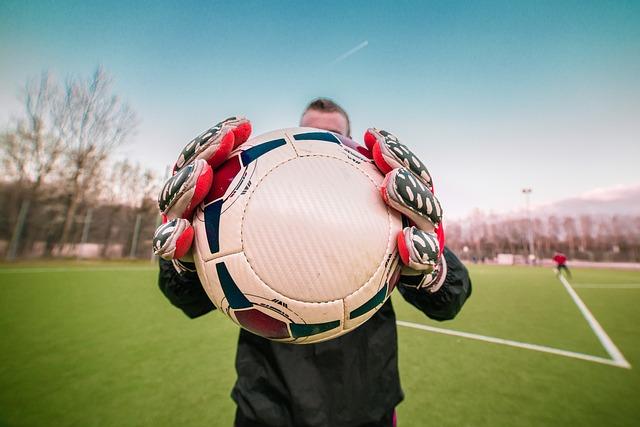
Contents
- 1 Goalkeeper: The Last Line of Defense
- 2 Defenders: Protecting the Goal and Creating Opportunities
- 3 Midfielders: The Engine of the Team
- 4 Forwards: Attacking with Speed and Precision
- 5 Understanding the Role of Wingbacks and Fullbacks
- 6 The Importance of Defensive Midfielders in Soccer
- 7 Central Midfielders: Orchestrating the Game
- 8 Strikers: Scoring Goals and Creating Fear in the Opposition
- 9 Analyzing Player Distribution Across Different Formations
- 10 Concluding Remarks
Goalkeeper: The Last Line of Defense
The goalkeeper is a crucial player on the soccer field, often referred to as the last line of defense. Their main role is to prevent the opposing team from scoring by stopping shots on goal. A skilled goalkeeper can make or break a game, with their ability to make saves under pressure and organize the defense.
When analyzing player distribution on the field, it’s important to understand the different positions that make up a soccer team. Each position has its own unique responsibilities and plays a specific role in contributing to the team’s overall strategy. While the goalkeeper is the last line of defense, there are several other key positions that play a significant role in both defense and offense.
- Defenders: Responsible for protecting the goal and preventing the opposing team from scoring. They work closely with the goalkeeper to maintain a strong defensive line and stop the attack.
- Midfielders: Control the flow of the game by transitioning between defense and offense. They are key playmakers and often dictate the pace and direction of the game.
- Forwards: Also known as strikers, their main objective is to score goals. They are often the most skilled and agile players on the team, capable of creating scoring opportunities and finishing plays.

Defenders: Protecting the Goal and Creating Opportunities
Defenders play a vital role in soccer, both in protecting the goal and creating opportunities for their team. There are several different field positions in soccer that defenders can play, each with its own unique responsibilities and roles.
1. **Center-Back**: The center-back is typically the last line of defense before the goalkeeper. They are responsible for marking the opposing team’s strikers and defenders, working together to maintain a strong defensive line.
2. **Full-Back**: Full-backs play on the left and right sides of the defense. They are responsible for supporting the center-backs in defending against opposing wingers and creating opportunities by overlapping with midfielders.
3. **Sweeper**: The sweeper is a more defensive-minded player who plays behind the center-backs. Their primary role is to sweep up any loose balls and provide cover for the defense in case of a breakaway.
4. **Wing-Back**: Wing-backs are hybrid players who combine defensive and offensive responsibilities. They must track back to defend against opposing wingers while also pushing forward to provide width in attack.
Understanding the different field positions in soccer can help coaches and players strategize effectively during matches. By analyzing player distribution and positioning, teams can optimize their defensive capabilities and create more scoring opportunities.
Midfielders: The Engine of the Team
Midfielders are often referred to as the engine of a soccer team, playing a crucial role in both defense and offense. They are responsible for controlling the flow of the game, dictating the pace, and linking up play between the defense and the attack. The midfield is where the action happens, with players constantly involved in intercepting passes, making tackles, and creating scoring opportunities.
In a standard soccer lineup, there are three key midfield positions: central midfielders, defensive midfielders, and attacking midfielders. Each position has its own set of responsibilities and characteristics that contribute to the team’s overall performance. Central midfielders are typically versatile players who are comfortable both defensively and offensively, while defensive midfielders focus on breaking up opposition attacks and shielding the defense. Attacking midfielders are known for their creativity, vision, and ability to unlock defenses with incisive passes and clever runs.
The distribution of players in the midfield can vary depending on the team’s playing style and tactics. Some teams may opt for a balanced midfield with equal numbers of players in each position, while others may favor a more defensive or attacking setup. Regardless of the formation, midfielders play a vital role in winning possession, maintaining control of the game, and creating scoring opportunities for their teammates. In essence, they are the heartbeat of the team, keeping the team ticking and driving them towards success.
Forwards: Attacking with Speed and Precision
One of the most crucial field positions in soccer is the forward position. Forwards are responsible for attacking the opposing team’s goal and scoring goals. They typically have excellent speed, agility, and precision in their movements, allowing them to outmaneuver defenders and create scoring opportunities.
A key attribute of forwards is their ability to make quick decisions and execute precise shots on goal. They must be able to anticipate plays, work well with their teammates, and capitalize on any openings in the defense. Forwards are often the playmakers on the field, setting up goal-scoring opportunities for themselves and their teammates.
In a typical soccer formation, forwards are positioned at the front of the attacking line, with the center forward being the primary goal scorer. On either side of the center forward, there are usually wingers who provide width to the attack and create space for the center forward to operate. Together, these forwards work in tandem to break down the opposing team’s defense and create scoring chances for their team.
Ultimately, forwards play a crucial role in a team’s success on the field. Their ability to attack with speed and precision can be the difference between a win and a loss in a soccer match. It is their skill and creativity that often make the difference in close games, turning potential draws into victories for their team.
Understanding the Role of Wingbacks and Fullbacks
Wingbacks and fullbacks play crucial roles in soccer, contributing both defensively and offensively to the team’s performance. Let’s break down their responsibilities and how they differ on the field:
Fullbacks:
- Typically positioned on the left and right sides of the defensive line.
- Main role is to prevent opponents from advancing towards the goal.
- Support midfielders and wingers by providing passing options.
- Can overlap with wingers to create attacking opportunities.
Wingbacks:
- Play a more offensive role compared to fullbacks.
- Often act as wingers when the team is in possession of the ball.
- Must track back quickly to cover their defensive responsibilities.
- Provide width to the team’s attack and help stretch the opposition’s defense.
| Fullbacks | Wingbacks |
|---|---|
| Primarily defensive role | Combination of attacking and defensive duties |
| Stay closer to the defensive line | Push higher up the field |
| Less involved in attacking plays | Act as additional attackers |

The Importance of Defensive Midfielders in Soccer
Defensive midfielders play a crucial role in soccer, acting as the backbone of the team’s defense while also providing support to the offense. These players are positioned between the defenders and the attacking midfielders, making them essential in both stopping the opposing team’s attacks and initiating their team’s plays. Without a strong defensive midfielder, a team can be left vulnerable to counterattacks and struggle to maintain possession of the ball.
One of the key responsibilities of defensive midfielders is to break up the opponent’s plays by intercepting passes and making crucial tackles. By winning back possession in the midfield, these players help to prevent the opposition from creating dangerous scoring opportunities. Additionally, defensive midfielders often act as a shield for the defense, providing cover and support to the backline when under pressure.
In addition to their defensive duties, defensive midfielders also play a vital role in dictating the tempo of the game and distributing the ball effectively. These players are often the link between defense and attack, transitioning the team smoothly from defense to offense. With their ability to read the game, anticipate plays, and make smart decisions on the ball, defensive midfielders are instrumental in setting the rhythm and flow of the game.
Central Midfielders: Orchestrating the Game
Central midfielders play a crucial role in orchestrating the game and controlling the flow of play in soccer. These players are often referred to as the engine room of the team, as they are responsible for connecting the defense with the attack and maintaining possession of the ball.
Central midfielders typically operate in the middle third of the field and are tasked with a variety of responsibilities, including:
- Dictating the tempo of the game
- Breaking up opposition attacks
- Providing support to both the defense and the attack
- Creating scoring opportunities for their teammates
Some of the key attributes of a successful central midfielder include good passing ability, vision, tactical awareness, stamina, and the ability to read the game. These players often serve as the playmakers of the team, using their skills to set up goals and dictate the rhythm of the match.

Strikers: Scoring Goals and Creating Fear in the Opposition
In soccer, field positions play a critical role in determining the flow and success of a team’s gameplay. Understanding the distribution of players on the field is key to maximizing scoring opportunities and minimizing defensive vulnerabilities. Below, we break down the key field positions in soccer:
**1. Goalkeeper**:
– The last line of defense, responsible for preventing the opposing team from scoring goals.
– Positioned in front of the goal and typically wears different colored attire than outfield players.
**2. Defenders**:
– Positioned in front of the goalkeeper to protect the goal and intercept opposition attacks.
– Can be divided into center-backs, full-backs, and wing-backs, each with specific defensive roles.
**3. Midfielders**:
– Straddling defense and offense, midfielders control the pace of the game by distributing the ball and providing support to both defensive and attacking players.
– Playmakers, central midfielders, and holding midfielders are some of the specialized roles within this position.
**4. Forwards/Strikers**:
– The offensive powerhouse of the team, responsible for scoring goals and putting pressure on the opponent’s defense.
– Strikers are adept at creating goal-scoring opportunities and instilling fear in the opposition with their attacking prowess.
Understanding the nuances of each field position is crucial for a well-balanced and effective soccer team. By strategically deploying players in these roles, teams can create a solid defensive structure, dominate the midfield battle, and capitalize on scoring opportunities with skilled forwards.
Analyzing Player Distribution Across Different Formations
When it comes to soccer formations, understanding the distribution of players across different field positions is crucial for coaches and players alike. Each formation has its own unique set of positions, each with specific roles and responsibilities. Let’s delve into the various field positions in soccer and analyze how players are distributed across different formations.
One of the most common formations in soccer is the 4-4-2 formation, which consists of four defenders, four midfielders, and two forwards. This formation emphasizes a balanced approach with equal numbers of players in defense, midfield, and attack. Defenders are responsible for protecting the goal, midfielders control the flow of the game, and forwards focus on scoring goals.
On the other hand, the 3-5-2 formation is a more attacking formation with three defenders, five midfielders, and two forwards. This formation provides additional support in the midfield, allowing for more creativity and offensive opportunities. Defenders in a 3-5-2 formation must be comfortable with playing a higher defensive line and covering more ground.
| Formation | Defenders | Midfielders | Forwards |
|---|---|---|---|
| 4-4-2 | 4 | 4 | 2 |
| 3-5-2 | 3 | 5 | 2 |
Understanding player distribution across different formations is essential for teams to adapt their strategies and tactics based on their strengths and weaknesses. By analyzing the field positions in soccer formations, coaches and players can optimize their gameplay and maximize their chances of success on the field.
Concluding Remarks
In conclusion, understanding the various field positions in soccer and their specific roles is essential for players, coaches, and fans alike. By analyzing the player distribution on the field, we gain a deeper insight into the strategic tactics and formations that teams employ to secure victory. So the next time you watch a match, pay attention to how players position themselves and how they contribute to the overall flow of the game. This knowledge will not only enhance your enjoyment of the sport but also deepen your appreciation for the skill and teamwork required to succeed on the soccer pitch.


