

Beginner’s Guide: 4U Soccer Drills for Young Players
Welcome to our beginner’s guide to 4U soccer drills for young players! Whether you’re a parent, coach, or even a young aspiring athlete yourself, this article is your go-to resource for getting started in the exciting world of soccer. We’ll walk you through a variety of drills specifically designed for kids just beginning their journey on the field. From essential skills to fun exercises, you’ll gain the knowledge needed to help these young players develop their confidence, coordination, and love for the game. So, buckle up and get ready to dive into the wonderful world of soccer drills suitable for our youngest athletes!
Contents
- 1 Introduction to Soccer Drills for Young Players
- 2 The Importance of Soccer Drills for Skill Development
- 3 Choosing the Right Soccer Drills for Young Players
- 4 Focus on Basic Techniques: Dribbling and Ball Control
- 5 Enhancing Passing and Receiving Skills in Young Soccer Players
- 6 Developing Shooting Accuracy and Power in Youth Soccer
- 7 Improving Defensive Skills: Tackling and Marking Drills
- 8 Building Mental Strength Through Soccer Drills for Young Players
- 9 Incorporating Fun and Engaging Drills for Young Soccer Players
- 10 To Wrap It Up
Introduction to Soccer Drills for Young Players
Soccer drills play a crucial role in the development of young players, as they provide essential practice and help build a strong foundation of skills. In this beginner’s guide, we will explore a variety of soccer drills specifically designed for the 4U age group. These drills are tailored to suit the needs of young players who are just starting their soccer journey.
-
Dribbling Drills:
- Cone Challenge: Set up a course using cones and have players dribble the ball through the course, focusing on ball control and agility.
- Follow the Leader: Have players pair up and take turns leading their partner with the ball, encouraging them to use different surfaces of their feet.
-
Passing Drills:
- Triangle Passing: Set up three cones in a triangle formation and have players pass the ball to each other, using both feet and focusing on accuracy.
- Wall Pass: Create a small space between two cones and have players pass the ball against the wall, practicing quick one-touch passes.
-
Shooting Drills:
- Target Practice: Set up targets in various locations within the goal and have players practice shooting, aiming to hit the targets with accuracy.
- Relay Shooting: Divide players into teams and set up cones as markers. Each player takes turns running to the cone and shooting towards the goal, aiming for accuracy and speed.
- Small-Sided Games:
- 2v2 Mini Game: Divide players into teams of two and have them play a small-sided game with no goalkeepers, encouraging quick decision-making and teamwork.
- Freeze Tag Soccer: Designate a few players as taggers and the rest as runners. When tagged, players freeze until a teammate passes the ball between their legs to unfreeze them.
Remember, the key to successful soccer drills for young players is to keep the activities fun, engaging, and age-appropriate. As they progress, gradually increase the difficulty and intensity of the drills. Stay tuned for more soccer drills and tips to help your young players hone their skills and develop a passion for the beautiful game!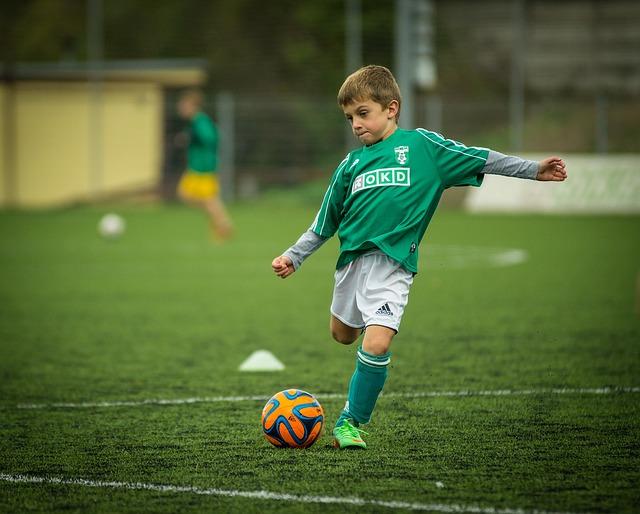
The Importance of Soccer Drills for Skill Development
Soccer drills play a crucial role in the skill development of young players. These drills are carefully designed to help beginners grasp the fundamentals of the game, develop their technique, and improve their overall performance on the field. Whether your child is just starting out or wants to refine their skills, incorporating specially designed soccer drills into their training routine can make a significant difference.
One of the main advantages of soccer drills is the improvement in ball handling and control. By engaging in various dribbling exercises, young players can enhance their coordination and learn how to maneuver the ball effectively. Additionally, these drills help develop their passing and receiving skills, enabling them to make accurate and controlled passes during a match.
Moreover, soccer drills focus on enhancing players’ agility and speed. Through footwork exercises and quick movements on the field, young athletes can develop their agility, enabling them to change directions swiftly while maintaining control of the ball. Speed drills help them increase their explosiveness and accelerate past opponents, giving them a competitive edge during matches.
Lastly, soccer drills contribute to the development of teamwork and communication skills. Many drills involve group activities, encouraging players to work together, communicate effectively, and understand each other’s roles on the field. This collaboration not only strengthens their bond as a team but also cultivates essential interpersonal skills that can be applied both on and off the soccer field.

Choosing the Right Soccer Drills for Young Players
Soccer drills are an essential part of training for young players, as they help build the necessary skills and improve their overall performance on the field. However, choosing the right drills can be a bit challenging, especially for beginners. In this post, we will guide you through the process of selecting the perfect soccer drills for your young players.
-
Consider the age and skill level: When choosing soccer drills for young players, it’s crucial to take into account their age and skill level. Younger players may require drills that focus on basic skills such as passing, dribbling, and shooting, while more advanced players can benefit from drills that involve tactics and game situations. By tailoring the drills to their specific needs, you can ensure that they are challenged but not overwhelmed.
-
Focus on individual and team development: Soccer is a team sport, but individual skills are equally important. Look for drills that target both individual and team development. Individual drills help players improve their technique, while team drills foster communication, collaboration, and understanding of game strategies. A well-balanced training program should include a mix of both types of drills.
-
Make it fun and engaging: Young players learn best when they are having fun. Incorporate drills that are not only challenging but also enjoyable. Games and competitions can make the drills more exciting and motivate players to give their best effort. Remember, the more engaged they are, the more they will learn and improve.
- Gradually increase the intensity: As your young players progress and develop their skills, it’s important to gradually increase the intensity of the drills. This helps them build endurance, strength, and mental toughness. Start with simple drills and gradually move on to more complex ones as their abilities improve.
In conclusion, selecting the right soccer drills for young players is all about considering their age, skill level, focusing on individual and team development, making it fun and engaging, and gradually increasing the intensity. Balancing these factors will contribute to the overall growth and enjoyment of the players as they continue to develop their soccer skills.
Focus on Basic Techniques: Dribbling and Ball Control
Dribbling and ball control are fundamental skills that every young soccer player should focus on developing. These skills lay the foundation for all other aspects of the game, and mastering them will greatly improve a player’s overall performance on the field. In this section, we will outline a few soccer drills that are specifically designed to help beginners enhance their dribbling and ball control abilities. So let’s dive in and get started!
-
Cone Dribbling Drill: Set up a series of cones in a straight line, approximately one yard apart. With the ball at your feet, dribble through the cones, using quick and controlled touches. Focus on keeping the ball close to your feet and maintaining good balance. Repeat the drill, trying to increase your speed and accuracy with each attempt.
-
Tug of War Drill: Divide the players into two teams and have each team form a line facing each other. Place a marker, such as a cone, in the middle of the field. Each player will have a ball at their feet and must try to pull the ball past the marker towards their team’s side. This drill not only improves dribbling skills but also encourages players to protect and control the ball under pressure.
-
Wall Passing Drill: Find a flat wall and stand about two steps away from it. Pass the ball against the wall with the inside and outside of your foot. Focus on controlling the ball and passing it back to yourself with accuracy. This drill helps develop both ball control and passing skills.
- Numbers Game: Divide the players into pairs and assign each pair a number from 1 to 4. Scatter a few cones on the field and call out a number. The players with that number must dribble around the cones while the other players try to steal the ball. This drill improves quick thinking, agility, and close ball control.
Remember, consistency and repetition are key to improving dribbling and ball control skills. Practice these drills regularly and challenge yourself to push beyond your comfort zone. With time and dedication, you’ll see significant progress in your overall soccer abilities. Keep up the hard work and enjoy the journey of becoming a better player!
Enhancing Passing and Receiving Skills in Young Soccer Players
Passing and receiving skills are fundamental in soccer and crucial for young players to develop. These skills not only enable players to maintain possession of the ball but also set them up for successful offensive plays. In this article, we will provide you with some effective soccer drills specifically designed for young players to enhance their passing and receiving skills.
-
Square Passing: Set up a square grid using cones or markers. Divide the players into pairs, with one player positioned on each corner of the square. The players should pass the ball back and forth using both feet, focusing on accuracy and control. Encourage the players to use the inside and outside of their feet to vary their passes. This drill promotes quick decision-making and improves passing technique.
-
Red vs. Blue: Divide the players into two teams, red and blue. Set up a smaller playing area, such as half of the field, and mark two goals on opposite ends. The objective of the game is for the red team to connect a certain number of passes without losing possession to score a goal. The blue team’s goal is to intercept the ball and score by passing it through the opposite goal. This drill simulates game-like situations and encourages players to work on their passing accuracy and timing.
-
Wall Passing: Find a sturdy wall or fence and have players stand a few feet away from it. They should take turns passing the ball against the wall using different techniques, such as one-touch passes, volleys, and headers. Emphasize the importance of using the right part of the foot or head for each technique. This drill improves passing accuracy, first touch, and reaction time.
- Small-Sided Games: Create small-sided games, such as 3v3 or 4v4, on a smaller field. Encourage players to pass and receive the ball as much as possible during the game. Small-sided games promote teamwork, decision-making, and awareness, all integral aspects of passing and receiving skills.
Remember, repetition and practice are key to improving passing and receiving skills. Incorporate these drills into your training sessions and provide constructive feedback to help young players develop their skills. With time and dedication, they will become more confident and proficient in passing and receiving the soccer ball.
| Soccer Drill | Objective |
|---|---|
| Square Passing | Improve passing accuracy and control |
| Red vs. Blue | Enhance passing accuracy and timing in game-like situations |
| Wall Passing | Improve passing accuracy, first touch, and reaction time |
| Small-Sided Games | Promote teamwork, decision-making, and awareness in passing and receiving |

Developing Shooting Accuracy and Power in Youth Soccer
In order to become a successful soccer player, mastering shooting accuracy and power is essential. As young players develop their skills, it is important to focus on drills that specifically target these areas. By incorporating the right techniques and exercises into training sessions, young soccer players can improve their shooting abilities and take their game to the next level.
1. Proper Technique
Before attempting to improve shooting accuracy and power, it is crucial for young players to learn and master the correct shooting technique. Coaches should emphasize the following key points:
- Ensure a balanced stance by placing the non-shooting foot slightly ahead of the ball.
- Plant the non-shooting foot next to the ball and align the kicking foot with the target.
- Focus on striking the middle of the ball with the laces, keeping the ankle locked and the toes down.
- Follow through by swinging the kicking leg forward and landing on the shooting foot.
2. Targeted Drills
There are several drills that can help young players improve their shooting accuracy and power. Incorporating these drills into practice sessions will allow players to develop the necessary skills:
- Shooting at Targets: Set up targets, such as cones or small goals, at various locations on the field. Players should aim to strike the ball accurately and hit the targets.
- Power Shooting: Create shooting scenarios where players can focus on producing power behind their shots. For example, have players practice shooting from distance or while running onto a pass.
- Game-like Situations: Simulate game-like scenarios where players have to execute accurate and powerful shots under pressure. This can be achieved through small-sided games or drills that involve decision-making and quick shooting.
3. Strength and Conditioning
In order to improve shooting power, young players should also focus on strength and conditioning exercises:
| Exercise | Description |
| Squats | Build leg strength and power by performing squats with proper form. |
| Lunges | Strengthen the lower body and improve balance by incorporating lunges into the workout routine. |
| Plyometric Exercises | Include exercises such as box jumps and power skips to develop explosive leg power. |
By combining technical drills, game-like situations, and strength and conditioning exercises, young soccer players can enhance their shooting accuracy and power. Consistent practice, along with a focus on the correct technique, will help them become more confident and effective shooters on the field.
Improving Defensive Skills: Tackling and Marking Drills
In this section, we will explore a variety of tackling and marking drills that are specifically designed for young players who are beginners in soccer. These drills will help improve their defensive skills and prepare them to become strong defenders on the field. So, let’s dive right in!
1. “Shadow Tackling”: This drill focuses on the technique of tackling without actually making physical contact with the opponent. It helps young players understand how to position themselves between the attacker and the goal while maintaining balance and control. Start by pairing players up and having them mirror each other’s movements. Encourage them to use proper body positioning, balance, and timing. This drill will develop their agility and defensive instincts.
2. “The Zigzag Drill”: This drill will improve players’ speed and agility while teaching them how to mark an opponent closely. Set up a zigzag course using cones, about 5 yards apart. Players will take turns dribbling the ball through the course while their partner closely marks them. The goal is to stay as close as possible without fouling. This drill will enhance their ability to anticipate the opponent’s moves and react quickly.
3. “1v1 Defensive Duels”: This is a game-based drill that encourages players to apply their tackling and marking skills in a competitive setting. Divide the players into pairs and set up small grids. Each player takes turns as the attacker and defender. Their goal is to either successfully tackle the ball or prevent the attacker from scoring. This drill allows players to develop their decision-making skills and learn how to react under pressure.
4. “Team Defense Drill”: Understanding the importance of teamwork in defense is crucial for young players. This drill involves the entire team and aims to improve their communication, coordination, and collaboration. Create two teams and set up a small playing area. One team will act as the attackers, and the other as the defenders. The attackers will try to penetrate the defensive line, while the defenders will work together to tackle and mark effectively. This drill emphasizes the significance of cohesive defensive strategy and reinforces the idea that defense is a collective effort.
Remember, the key to becoming a strong defender lies in practice and repetition. Encourage young players to engage in these drills regularly to enhance their tackling and marking skills. With time and commitment, they will become formidable defenders on the soccer field.
Building Mental Strength Through Soccer Drills for Young Players
Developing mental strength is just as important as physical fitness for young soccer players. While soccer drills primarily focus on improving technical skills and physical endurance, incorporating exercises to enhance mental resilience can greatly benefit players on and off the field. Here, we introduce you to a beginner’s guide to 4U soccer drills that not only nurture soccer abilities but also build mental toughness.
1. Visualization: Encouraging young players to visualize success before performing a drill can help boost their confidence and mental resilience. Before each training session, ask players to imagine themselves successfully executing the intended skills. This exercise allows them to develop a positive mindset, preparing them to overcome challenges with focus and determination.
2. Decision Making: Soccer is a fast-paced game that requires split-second decision making. Incorporating drills that simulate decision-making scenarios can enhance players’ cognitive abilities and improve their on-field performance. Set up small-sided games where players are challenged to make quick decisions such as passing, shooting, or defending. This not only improves their game intelligence but also trains them to stay calm under pressure.
3. Goal Setting: Teaching young players the importance of setting goals helps them develop mental resilience and discipline. Encourage players to set both short-term and long-term goals, such as improving passing accuracy or scoring a certain number of goals per season. Regularly evaluate their progress and provide feedback, emphasizing the importance of perseverance and determination in achieving their goals. This exercise helps young players develop a growth mindset and motivates them to continuously improve.
4. Team-Building Activities: Soccer is a team sport, and building strong bonds among players is crucial for success. Incorporating team-building activities, such as group exercises or friendly competitions, can help young players develop trust, cooperation, and communication skills. These activities teach players the value of support, unity, and mental resilience when facing challenges together.
| Skill | Drill Description |
|---|---|
| Agility | Set up cones in a zigzag pattern. Players dribble the ball through the cones, focusing on quick changes of direction and maintaining control. |
| Focus | Create a passing circuit with multiple players. Players must make accurate passes while maintaining focus and awareness of their surroundings. |
| Resilience | Organize a small-sided game with limited space. Players must adapt to tight spaces, be resilient in their defending, and quickly transition to attack. |
Incorporating mental strength-building exercises into soccer drills for young players not only enhances their performance on the field but also equips them with vital life skills. By creating an environment that promotes mental toughness, coaches can shape young athletes who are confident, resilient, and capable of overcoming adversity both in soccer and in life.
Incorporating Fun and Engaging Drills for Young Soccer Players
Soccer is a fantastic sport for young players to get involved in. Not only does it provide a great source of exercise, but it also helps to develop important skills such as coordination, teamwork, and sportsmanship. However, keeping young players engaged during practice can sometimes be a challenge. That’s where incorporating fun and engaging drills comes in!
One drill that young soccer players will love is the “Dribble-Pass-and-Shoot” drill. This drill not only helps players improve their dribbling skills but also teaches them the importance of passing and teamwork. Set up a small grid and separate the players into teams of two. Each team will have one ball to start with. Players must take turns dribbling the ball around the grid, passing it to their teammate, and then taking a shot on goal. The team with the most goals at the end wins! This drill not only encourages players to work together, but it also allows them to practice multiple skills at once.
Another fun and engaging drill for young soccer players is the “Obstacle Course” drill. Set up a variety of obstacles such as cones, agility ladders, and small hurdles in a designated area. Divide the players into teams and have them race against each other through the obstacle course. This drill helps to improve players’ agility, speed, and coordination while also adding an element of fun competition. You can even add a twist by incorporating soccer-related challenges such as dribbling through cones or taking a shot on goal at the end of the course.
A third drill that young soccer players will enjoy is the “Passing Circle” drill. Have players stand in a circle, with one player positioned in the center. The players in the circle must pass the ball to each other using both feet while the player in the center tries to intercept the passes. Every time the center player successfully intercepts a pass, they switch places with the player who made the errant pass. This drill helps to improve passing accuracy and teaches players to be aware of their surroundings on the field.
Finally, for some added fun and competition, consider organizing a mini-tournament or scrimmage among the young soccer players. Divide them into teams and let them compete against each other, putting their newly learned skills to the test. This not only allows players to show off their skills in a game-like setting but also helps build teamwork and camaraderie among teammates.
Incorporating fun and engaging drills is key to keeping young soccer players excited and motivated during practice sessions. By adding elements of competition, teamwork, and creativity, you can make each training session a memorable and enjoyable experience for all involved. Remember to tailor the drills to the skill level and age of the players, as well as provide positive reinforcement and encouragement throughout. With these drills, young soccer players will be on their way to becoming skilled and enthusiastic athletes!
To Wrap It Up
So there you have it, a comprehensive beginner’s guide to 4U soccer drills for young players. We hope that this article has provided you with valuable information on how to lay the foundation for success in the beautiful game. Remember, it’s all about starting small, building strong foundational skills, and most importantly, having fun on the pitch. By practicing these drills consistently, your young athletes will not only enhance their technical abilities but also develop a love for the sport that will last a lifetime. So, grab a ball, gather your team, and go out there to conquer the soccer world!


